
What Can You Put in a Dumpster?

Quick Guide to Dumpster Materials
| Category | Examples | General status |
| Household junk | Furniture, carpet, boxes, clothing, general clutter | Often accepted |
| Remodeling debris | Wood, drywall, cabinets, flooring, shingles | Often accepted |
| Electronics and appliances | TVs, computers, refrigerators, air conditioners | Ask first |
| Hazardous materials | Paint, fuel, chemicals, solvents, pesticides | Not accepted |
| Heavy materials | Concrete, dirt, brick, block, rock, plaster | Ask first |
| Special items | Tires, insulation, unusual appliances | Ask first |
| Yard debris | Branches, leaves, grass, shrubs | Use a dedicated yard waste dumpster |
Keep hazardous materials, electronics, appliances containing refrigerant, concrete, dirt, brick, block, plaster, and other heavy debris out of the dumpster. Tires need separate handling, and insulation must be bagged.
How to Estimate How Much Space You Need
The hardest part of a cleanup is often judging how much room the debris will take once everything is removed. Large items such as furniture, cabinets, carpet, and boxes can fill a dumpster quickly, even when the project covers only one or two rooms.
Before choosing a size, look at the cleanup area and group the debris by type. Ask yourself how many bulky items you have, whether anything can be broken down, and whether more waste may appear once the work begins.
A few simple checks can help:
- Count large furniture pieces
- Estimate how many rooms or work areas are involved
- Break down boxes and cabinets when practical
- Separate bulky debris from dense debris
- Leave room for waste created later in the project
It is usually better to describe the full job instead of naming a size right away. Those details make it easier to compare the available options and choose the right size.
Why Weight Matters as Much as Volume
A dumpster can have open space left and still reach its weight allowance. Dense materials add weight much faster than bulky household junk, so the type of debris matters just as much as how full the container looks.
Roofing shingles, flooring, drywall, and other remodeling debris can become heavy quickly. Furniture, cardboard, and general clutter may take up more room while weighing less.
Before choosing a dumpster, think about:
- Whether the load is mostly bulky or dense
- How much remodeling debris the project may create
- Whether heavier materials can be separated
- The included weight allowance for the selected size
- The overage rate if the load exceeds that allowance
Describing the debris in detail makes it easier to compare dumpster options and understand the weight limits before delivery.
Household Items
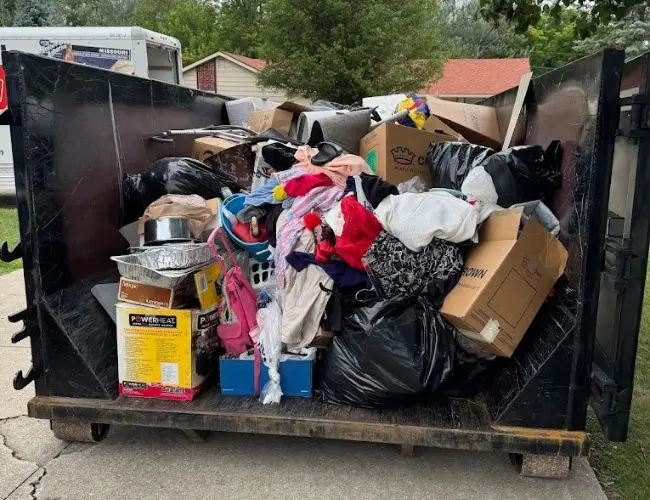
Most dry, nonhazardous household junk can go into a dumpster, which makes one useful for clearing garages, attics, basements, spare rooms, and storage areas. Furniture, carpet, clothing, boxes, toys, decorations, and general clutter are common examples, as long as they do not contain restricted materials.
| Usually Suitable | Check Before Loading | Keep Out |
| Furniture | Bags and boxes with unknown contents | Paint and cleaning chemicals |
| Carpet and rugs | Cabinets and drawers | Batteries |
| Clothing and textiles | Small appliances | Televisions and computers |
| Toys and decorations | Containers that may hold liquid | Refrigerators and freezers |
| General household clutter | Items with cords, motors, or batteries | Air conditioners and other items containing refrigerant |
Before loading, open bags, boxes, drawers, and cabinets so you know what is inside. Hidden paint cans, batteries, electronics, chemicals, or liquids can turn a simple cleanout into a disposal problem.
Appliances need extra attention because some contain electronics, batteries, oil, or refrigerant. Refrigerators, freezers, air conditioners, televisions, computers, and similar items usually cannot go into these dumpsters, but you can always ask your dumpster rental company first.
Construction and Remodeling Debris
Wood scraps, drywall, cabinets, flooring, carpet, and roofing shingles may be suitable for a remodeling dumpster. The main concerns are material type, total weight, and whether the debris contains anything hazardous.
Keep these materials separate:
- Concrete
- Brick and block
- Dirt, sand, and rock
- Plaster
- Paint and chemicals
- Asbestos
- Electronics and appliances
Roofing and renovation debris can become heavy before the dumpster looks full. Ask about the included weight allowance and describe the job before choosing a size.
Yard Waste
Yard waste should not go into a standard household or remodeling dumpster, but a dedicated yard waste dumpster may be available. Branches, leaves, grass, shrubs, and similar landscaping debris should be kept separate from regular junk and construction materials.
Before scheduling, explain what type of yard debris you have and how much you expect to remove. Dirt, rock, concrete, brick, block, and plaster still require separate approval or another disposal option.
Concrete and Heavy Materials
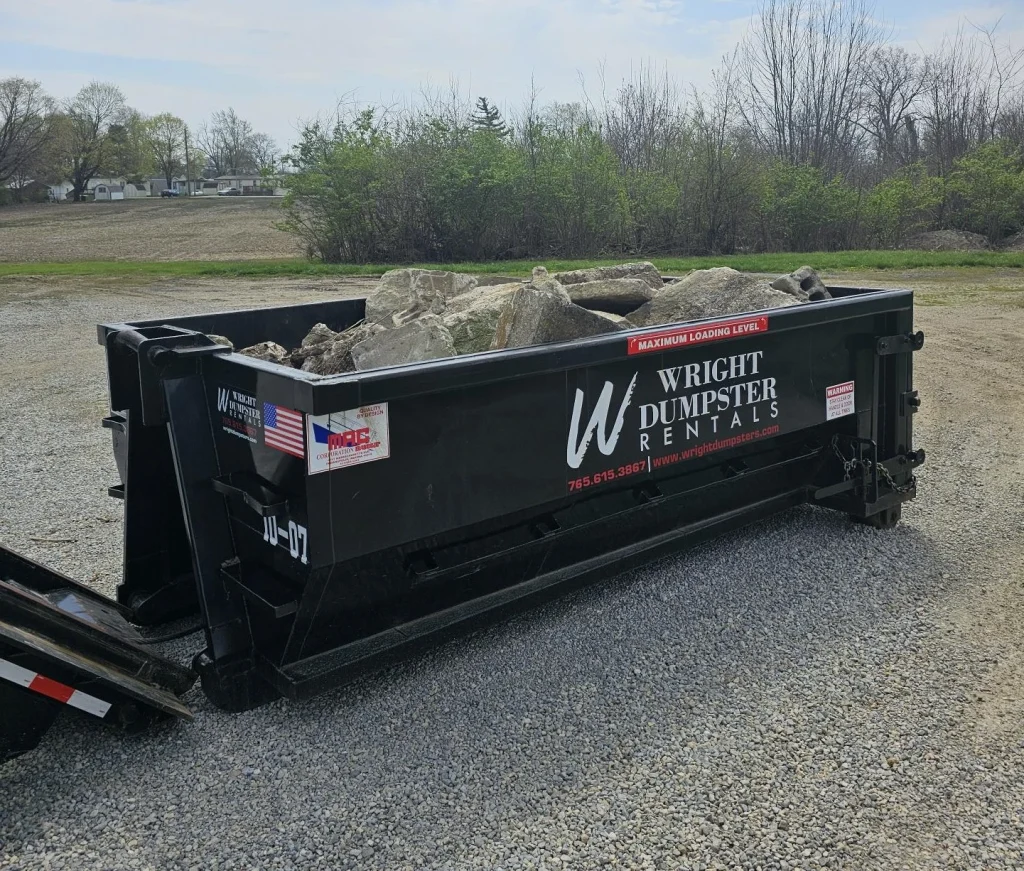
Concrete, brick, block, rock, sand, dirt, and plaster cannot go into a standard dumpster. These materials are dense and can exceed the container’s weight allowance long before the dumpster appears full.
Projects involving driveways, patios, foundations, retaining walls, or masonry may need a different container or disposal route. Describe the material before scheduling so you are not forced to unload it later.
What Cannot Go in a Dumpster?
Hazardous materials, liquids, electronics, items containing refrigerant, and certain heavy materials cannot go into the dumpster. These items need separate handling because they may create safety, environmental, or disposal problems.
Keep out:
- Paint, oil, fuel, solvents, and chemicals
- Batteries
- Propane tanks
- Fluorescent tubes
- Asbestos
- Medical or infectious waste
- Pesticides and cleaning supplies
- Liquids
- Concrete, dirt, brick, block, rock, sand, and plaster
Do not assume an empty can, tank, appliance, or piece of equipment is safe to discard. A can, tank, appliance, or piece of equipment may still contain residue, refrigerant, fuel, or another restricted substance.
Items That Require Approval
Some materials need a direct answer before loading. Tires may involve separate handling and added charges. Insulation must be bagged. Unmarked containers, large metal items, unusual appliances, and mixed demolition loads should also be discussed in advance.
Ask first when you have:
- Tires
- Bagged insulation
- Unmarked cans or containers
- Large metal objects
- Mixed demolition debris
- Unmarked items that may have held fuel, oil, or chemicals
Describe the item, quantity, size, and previous use. A photo can also help clarify what you have.
Check the Dumpster Before Pickup
A short check before pickup can help you avoid delays and added charges.
- Remove prohibited materials.
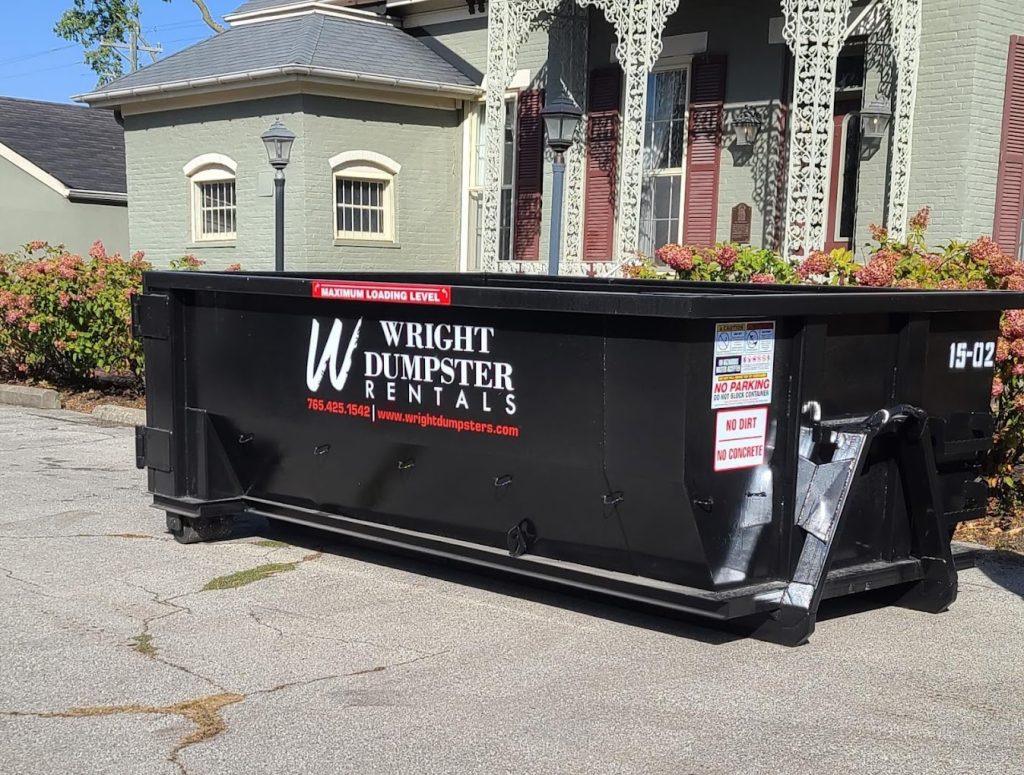
- Keep debris below the maximum loading line.
- Take off tarps, straps, locks, and other attachments.
- Clear vehicles and obstacles from the pickup route.
- Leave the dumpster where it was placed.
The rental agreement allows additional charges or delayed service when a dumpster is overloaded, blocked, moved, or filled with restricted materials.
Know Before You Load in Central Indiana
The answer to “what can you put in a dumpster?” depends on the material, weight, disposal rules, and contents of the full load. Sorting first is much easier than removing a restricted item after the dumpster is full.
Wright Dumpster Rentals helps you review accepted materials and choose a dumpster that fits the cleanup. Explore our dumpster rentals or browse the questions people usually ask before scheduling in Central Indiana.
Frequently Asked Questions
Yes, accepted household and remodeling materials may be mixed in the same dumpster. Furniture, carpet, wood, drywall, cabinets, and boxes may work together, but restricted materials must stay out. Keep electronics, chemicals, liquids, refrigerant appliances, concrete, dirt, brick, plaster, and yard waste separate.
Mattresses and furniture may be suitable for a household cleanout dumpster. Break down large pieces when practical so they use less space, and check drawers or compartments for batteries, electronics, chemicals, or other restricted items before loading.
Set them aside until you receive a clear answer. Be ready to explain:
- What the item is made of
- Its size and quantity
- Whether it contains liquid
- Whether it held fuel or chemicals
- Whether it contains a battery or refrigerant
A phone call can confirm the right disposal option before the item creates a problem in the load.
Insulation may be accepted when it is securely bagged. Loose insulation should not go into the dumpster. Confirm the type and amount before loading it, especially if it is old, damaged, or mixed with other building materials.
No. The load must stay at or below the marked maximum loading line or the top edge of the dumpster. Lightweight material can still shift or fall during transport, and an overfilled dumpster may be left in place until the debris is brought down to a safe level.