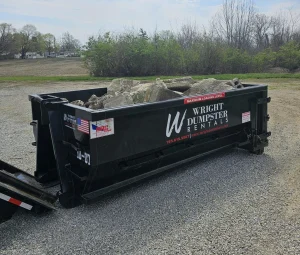

A dumpster can sit safely on many driveways, but the surface, placement, weight, and weather all matter. The best way to protect a driveway from a dumpster is to choose a firm placement area, keep the load within limits, leave enough room for delivery, and use protective boards when appropriate.
Driveway damage is not automatic. Most problems happen when a container is placed on weak pavement, soft ground, cracked concrete, or an area that cannot handle the combined weight of the dumpster, debris, and delivery truck.
Can a Dumpster Damage a Driveway?
Yes, a dumpster can damage a driveway in some situations. The most common risks are cracks, dents, surface marks, and sinking at the contact points.
Damage is more likely when:
- The driveway already has cracks or weak spots
- The surface is soft from heat, rain, or poor drainage
- The dumpster holds very heavy debris
- The container is placed near an edge
- The delivery truck has limited room to maneuver
- The dumpster is moved after placement
A driveway-safe dumpster rental starts with an honest look at the placement area. If the surface is uneven, damaged, narrow, or recently installed, mention that before delivery.
Concrete vs. Asphalt Risk
Concrete and asphalt react differently under weight.
| Driveway Type | Main Concern | What Helps |
| Concrete | Cracking along weak areas or joints | Use a level section and avoid damaged edges |
| Asphalt | Dents, sinking, or surface marks | Use boards and avoid soft or hot areas |
| Gravel | Shifting or rutting | Choose a firm, compacted section |
| Pavers | Movement or cracking | Ask about another placement option |
Concrete is strong, but it can crack where the slab is already weakened. Expansion joints, corners, and edges deserve extra care because they may not handle concentrated weight as well as the center of a solid slab.
Asphalt is more flexible, but it can soften during hot weather. A loaded dumpster may leave dents or marks if its weight rests on a small area for several days.
Preparing the Placement Area
A little preparation before delivery can reduce the risk of damage and make placement easier. Start by choosing the flattest, strongest part of the driveway with enough room for the truck to approach and leave.
Before the dumpster arrives:
- Move vehicles out of the driveway
- Clear tools, toys, and loose materials
- Open gates
- Check for low branches and overhead wires
- Mark sprinkler heads or hidden features
- Point out cracks, slopes, or soft areas
- Keep the residential dumpster placement away from driveway edges when possible
The delivery path matters just as much as the final spot. A driver needs enough room to back in, lower the container, and pull away without sharp turns or sudden corrections.
Protective Boards and Surface Protection
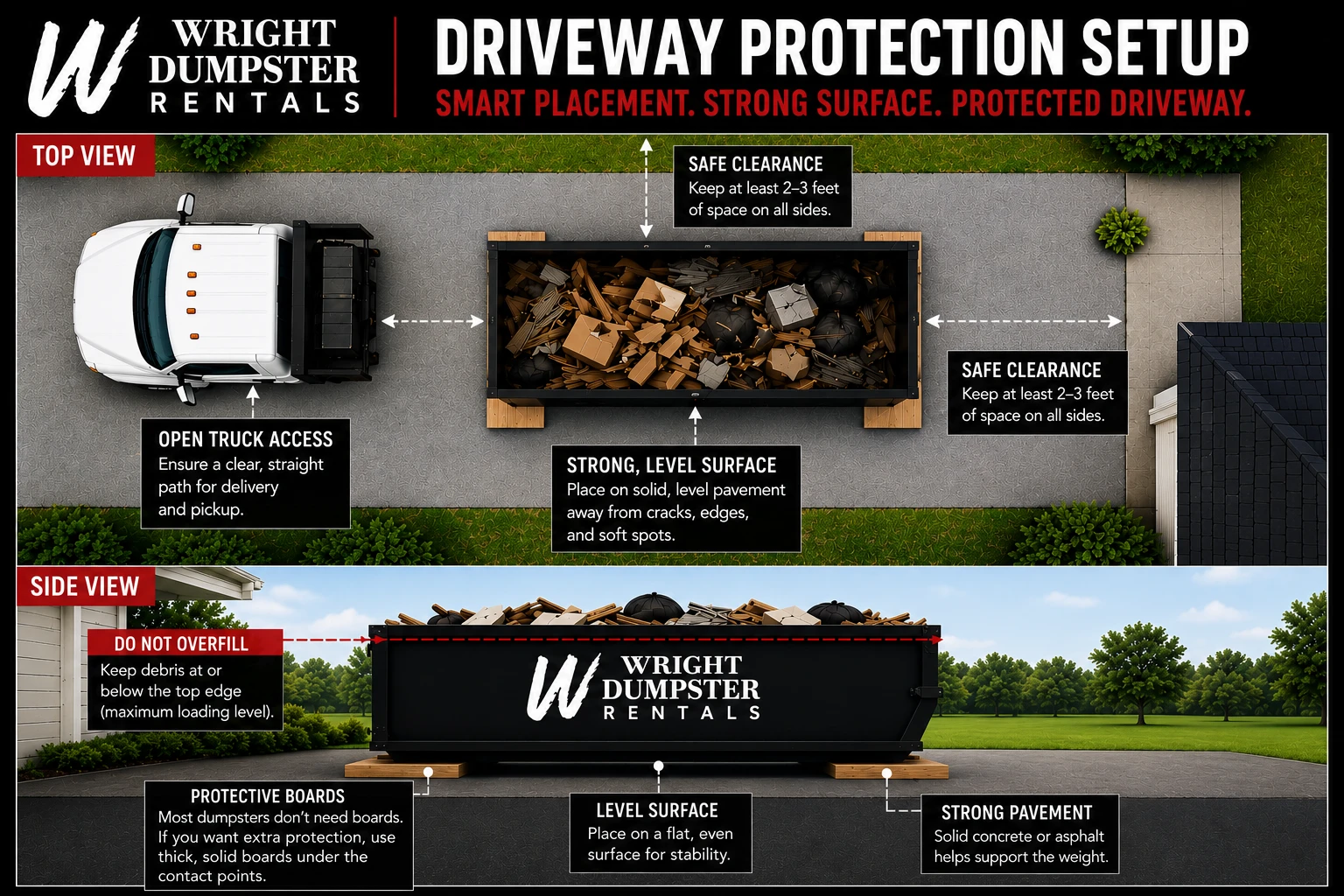
Most dumpster placements do not require protective boards, especially when the driveway is firm, level, and in good condition. If you want an extra layer of protection, you can place thick, solid boards beneath the dumpster’s contact points before delivery.
Boards may help:
- Spread weight across a wider area
- Reduce scraping or surface marks
- Limit dents in softer asphalt
- Create a buffer between steel and pavement
Use flat, stable boards that can support the container without shifting. Thin scraps, warped lumber, or uneven pieces may create an unstable base.
Boards can reduce some surface contact, but they do not remove every risk. Cracked concrete, weak pavement, soft ground, and heavy loads can still cause damage, so good placement and careful loading remain important.
Delivery Clearance
Delivery clearance helps protect both the driveway and the surrounding property. When the truck has enough space, the driver can place the dumpster without unnecessary turning, repositioning, or pressure near the edge of the pavement.
Check for:
- Parked vehicles
- Basketball hoops
- Tree branches
- Utility lines
- Gates and fences
- Roof overhangs
- Narrow turns
- Steep slopes
Keep the full access route open before delivery. The same area will need to remain clear when the dumpster is picked up. For projects at homes, residential dumpster rentals often work best when the placement area is reviewed before the delivery date rather than chosen at the last minute.
Preventing Overloading
Overloading increases the weight pressing on the driveway and can also make pickup more difficult. Keep debris at or below the marked loading line and do not let materials hang over the sides.
Weight can build quickly with:
- Roofing shingles
- Tile
- Flooring
- Drywall
- Dense remodeling debris
Spread accepted materials across the container instead of piling everything at one end. Uneven loading can place extra pressure on a smaller section of the driveway.
Heavy materials such as concrete, dirt, brick, block, rock, sand, and plaster may require a different disposal option. Ask before loading anything dense or unusual into standard dumpster rentals.
Should You Choose Another Placement Area?
A driveway is not always the best choice. A nearby parking area, job site surface, or another firm location may offer a lower risk of damage.
Consider another spot when the driveway is:
- Recently poured or paved
- Heavily cracked
- Narrow or steep
- Made from decorative pavers
- Soft near the edges
- Difficult for the truck to access
Street placement may require local approval or permits, so do not assume it is available. Confirm the rules before scheduling delivery.
Protect Your Driveway Before Delivery
The key to protecting a driveway is planning before the dumpster arrives. Choose the strongest available surface, keep the access route open, use protective boards when appropriate, and avoid overloading the container.
For projects in Central Indiana, Wright Dumpster Rentals can review the placement area, discuss access concerns, and help you choose a dumpster that fits the cleanup without adding unnecessary stress to the property.
Frequently Asked Questions
Yes, especially if the concrete is already weak, cracked, thin, or poorly supported underneath. Placing the dumpster on a level section away from edges, joints, and visible damage can reduce the risk, but no placement method can remove it completely.
Protective boards can help spread the weight and reduce direct contact between the dumpster and the driveway. Use solid, flat boards that can sit securely beneath the container, since thin scraps, warped lumber, or unstable pieces may shift during placement.
Yes, but asphalt can dent, sink, or soften, especially during hot weather or when the dumpster is heavily loaded. Protective boards, careful placement, and avoiding weak or uneven areas can help reduce marks and pressure on the surface.
Choose a flat, firm section with enough room for the truck to enter, lower the dumpster, and leave without sharp turns. Avoid edges, steep slopes, cracked areas, soft spots, and locations near low branches, wires, or other obstacles.
Mention any concerns that could affect placement, including:
- Existing cracks
- Narrow access
- Soft ground
- Low wires or branches
- Steep slopes
- Recently installed pavement
Sharing the placement details before delivery gives the driver a chance to review access, surface conditions, and any obstacles around the planned spot.